Workflow & Task Automation.
If a task happens the same way every time, it can run without you. We build that automation end to end, and it works while you sleep.
Most of the work that eats your week follows a pattern. Something happens, you look something up, you type it in somewhere, you send a message. Same steps, every time. That pattern is the whole trick: if a task runs the same way every time, a computer can run it. We find those tasks in your business, label the triggers, and build the automation end to end.
Every screenshot on this page is a real task from Wil's own property management company, handled by the same kind of automation we build for clients. Some fire when something happens: a tenant email, a forgotten bill. Others run on a schedule, at 6 am, before anyone is at a desk. Either way, the work is done before you would have gotten to it.
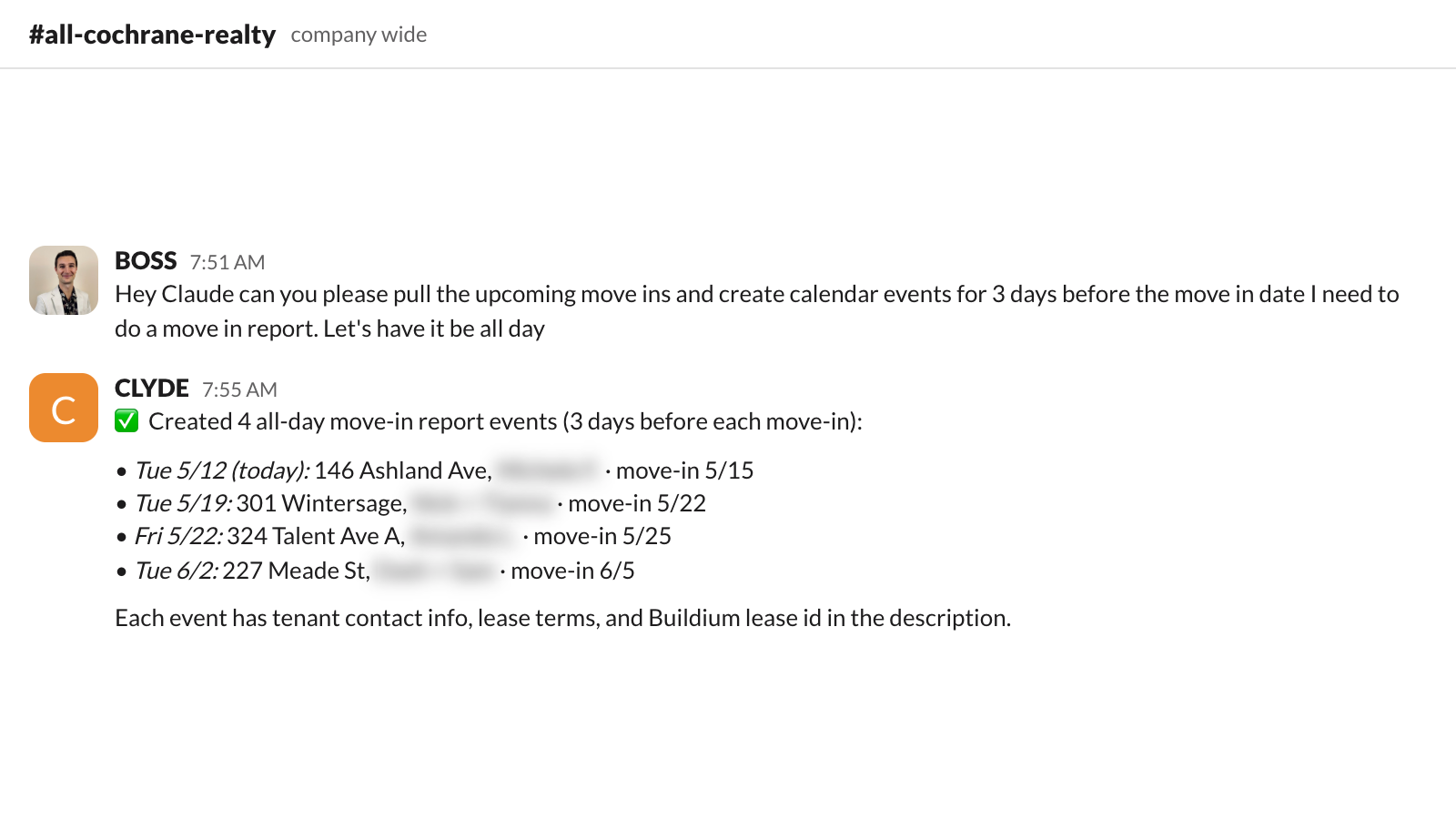
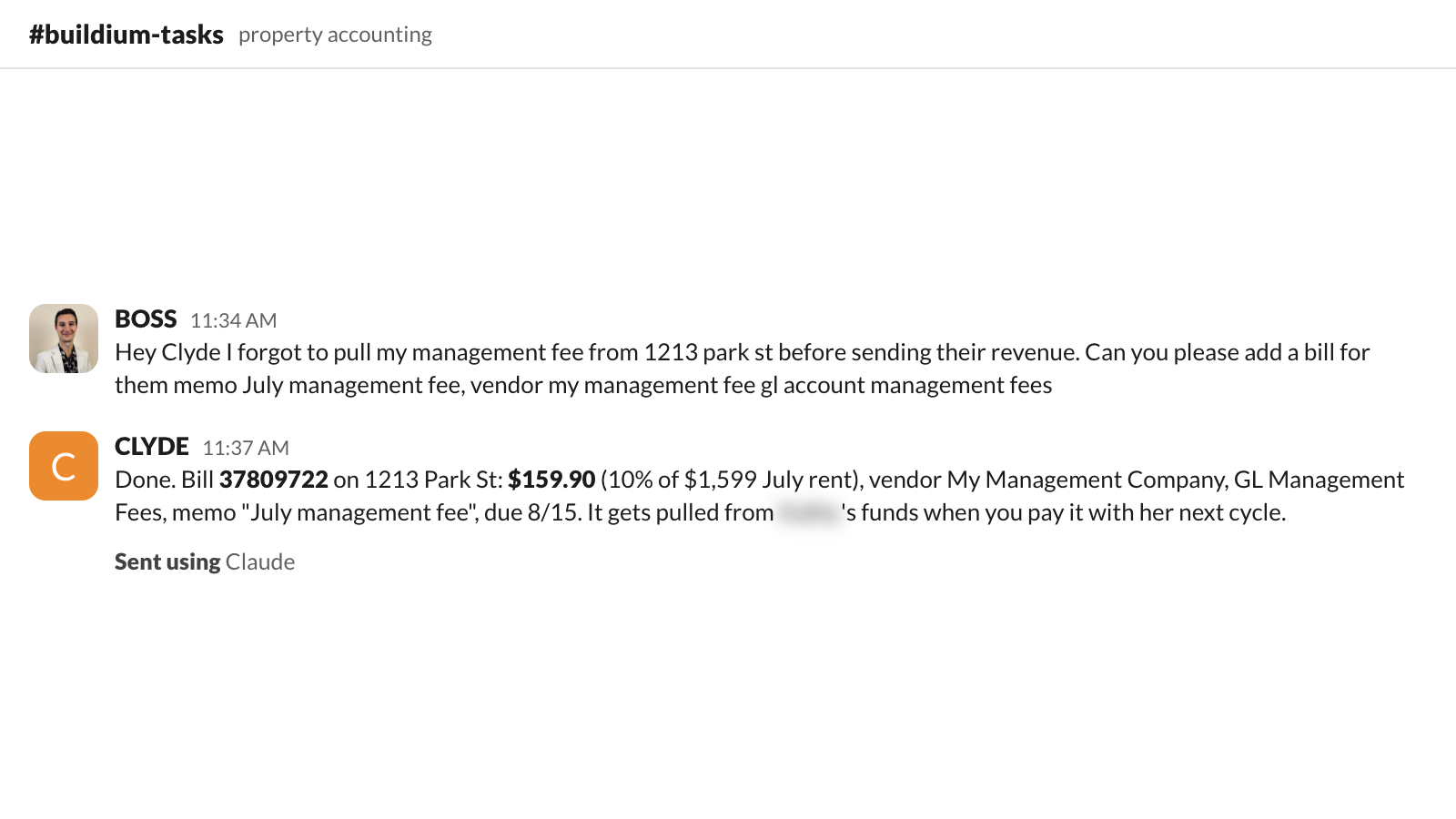
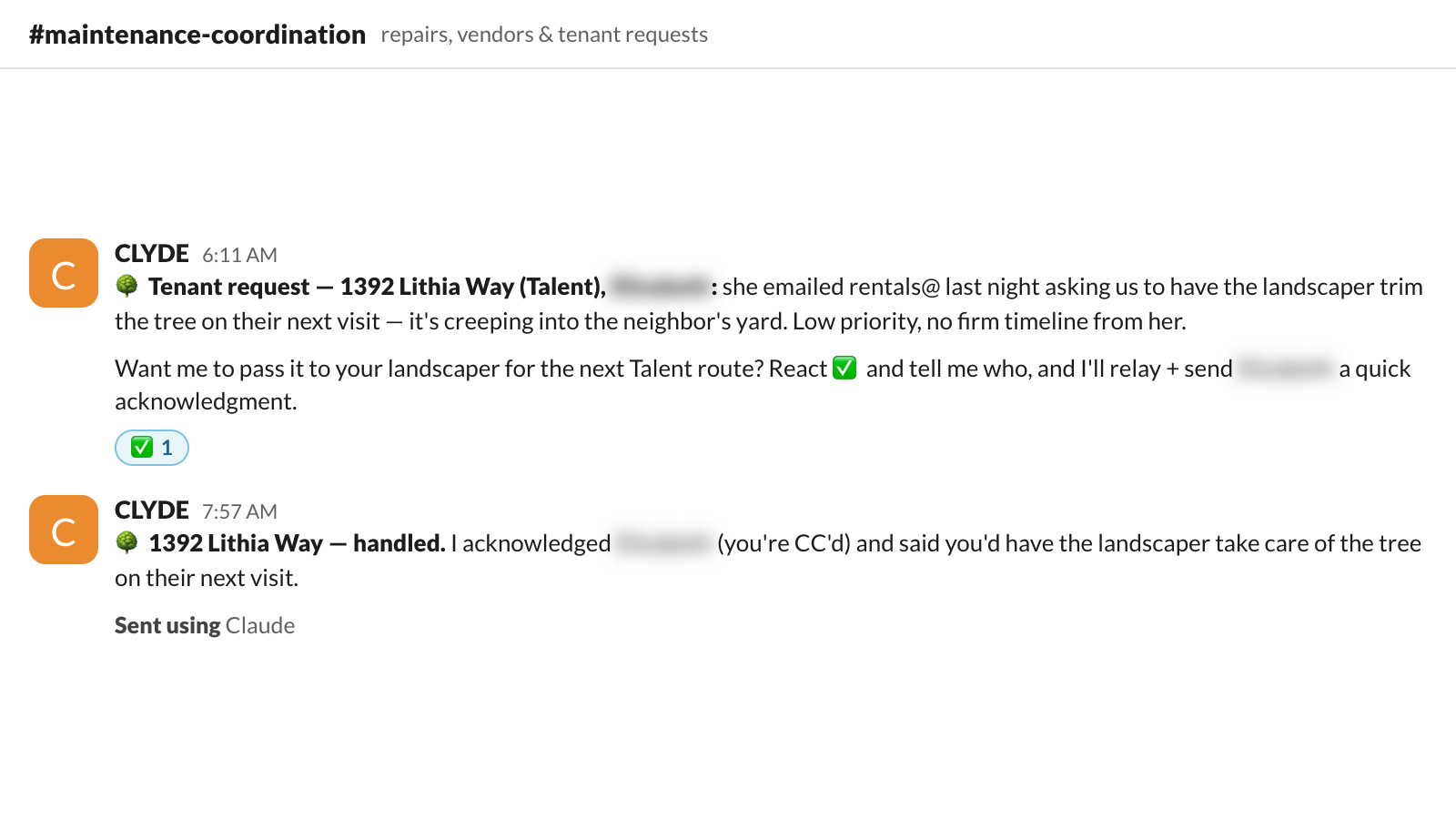
you're in here somewhere
You're elbow-deep in a repair when the phone rings, and nobody leaves a voicemail: they just dial the next plumber on the list. A missed-call text-back answers in seconds and books the routine work, and after hours it only wakes you for the emergencies actually worth getting out of bed for.
Someone booked a 90-minute color three weeks ago and forgot, and now the chair sits idle through a slot you can never re-sell. Most no-shows aren't flakes, they just forgot: a text two days out catches them, and a small deposit on the long bookings handles the rest.
You mowed a hundred yards this month, and now comes the second job: mailing invoices, waiting weeks, calling the people who ignore them. Put a card on file instead. The whole week's work bills itself in a few clicks, and the money lands in days, not a month.
Every two weeks you hunch over the same spreadsheet, hand-tallying hours and retyping dates, and one missed time-off request means an uncovered friday rush and a resentful cook. Put swaps, availability, and requests in one place, and the schedule builds itself and shows up on everyone's phone.
Every estimate is a second unpaid job: hours of measuring and pricing at the kitchen table after the paying work is done, and the tired brain writing it usually underprices it. Templates built from your real hours on past jobs write most of the next one, and the follow-up sends itself instead of dying in someone's inbox.
The inventory spreadsheet is only as accurate as the last person who remembered to update it, so you find out the best-seller is gone when a regular asks for it. Connect the counts to your register and stock updates as it sells, flagging what to reorder before the shelf goes empty.
This is live work, not a pitch. Right now, one monthly job we run for an insurance services client moves 500,000 rows of Excel data between spreadsheets, on schedule, with nobody touching it. Once an automation is built, size stops mattering. see the use cases →
Let's find your first automation.
Tell us where your time goes, and we'll show you what we'd unlock first.