Data Cleanup & Integrations.
The same numbers live in your books, your industry software, and a spreadsheet somewhere. We make them agree, then keep them that way.
Most small businesses run on two to four copies of the same information: the accounting software, the industry software, a spreadsheet or two, and a stack of paper. Every copy drifts a little. So you stop trusting the numbers, and you burn hours retyping and double-checking instead of working.
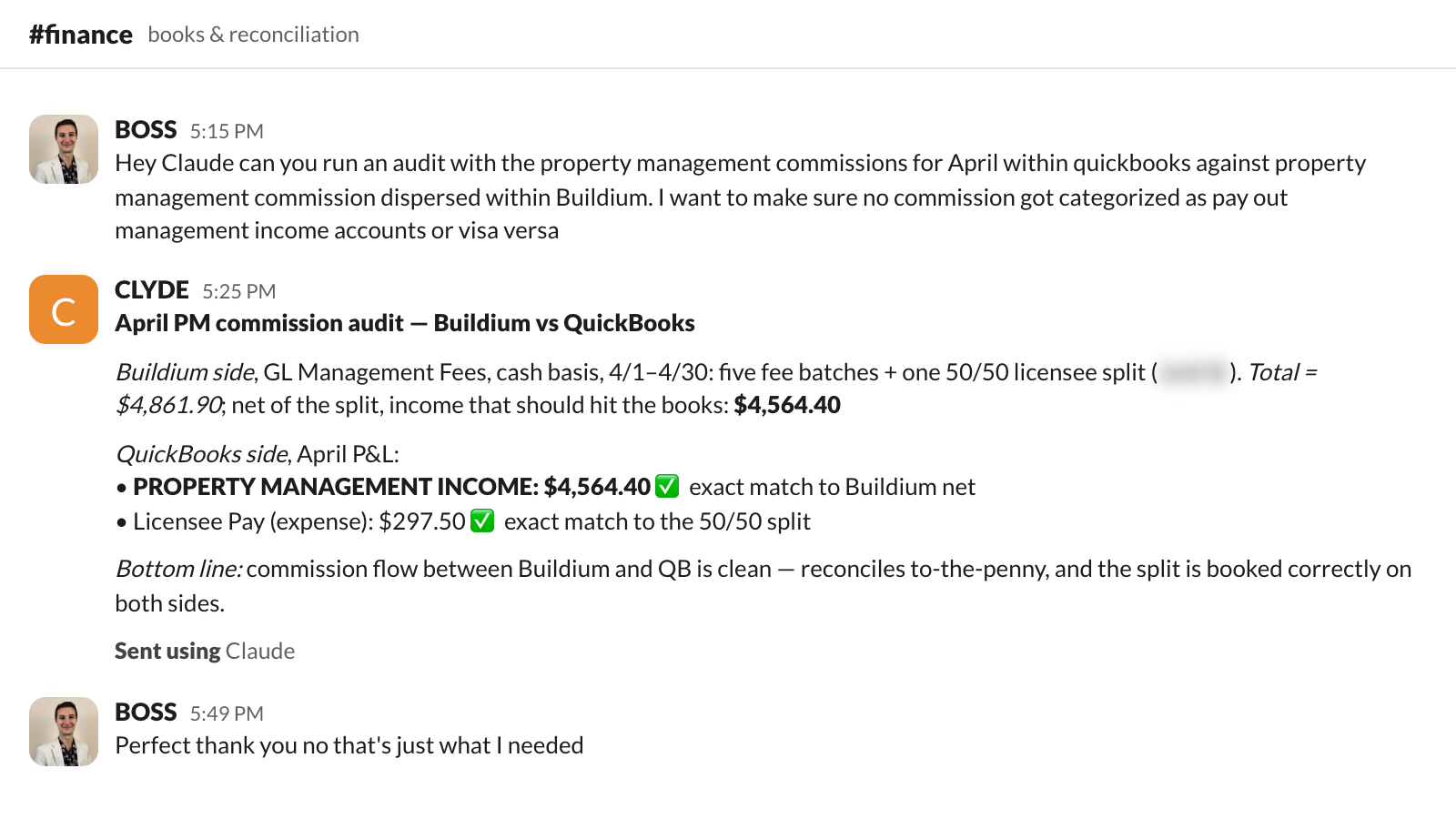
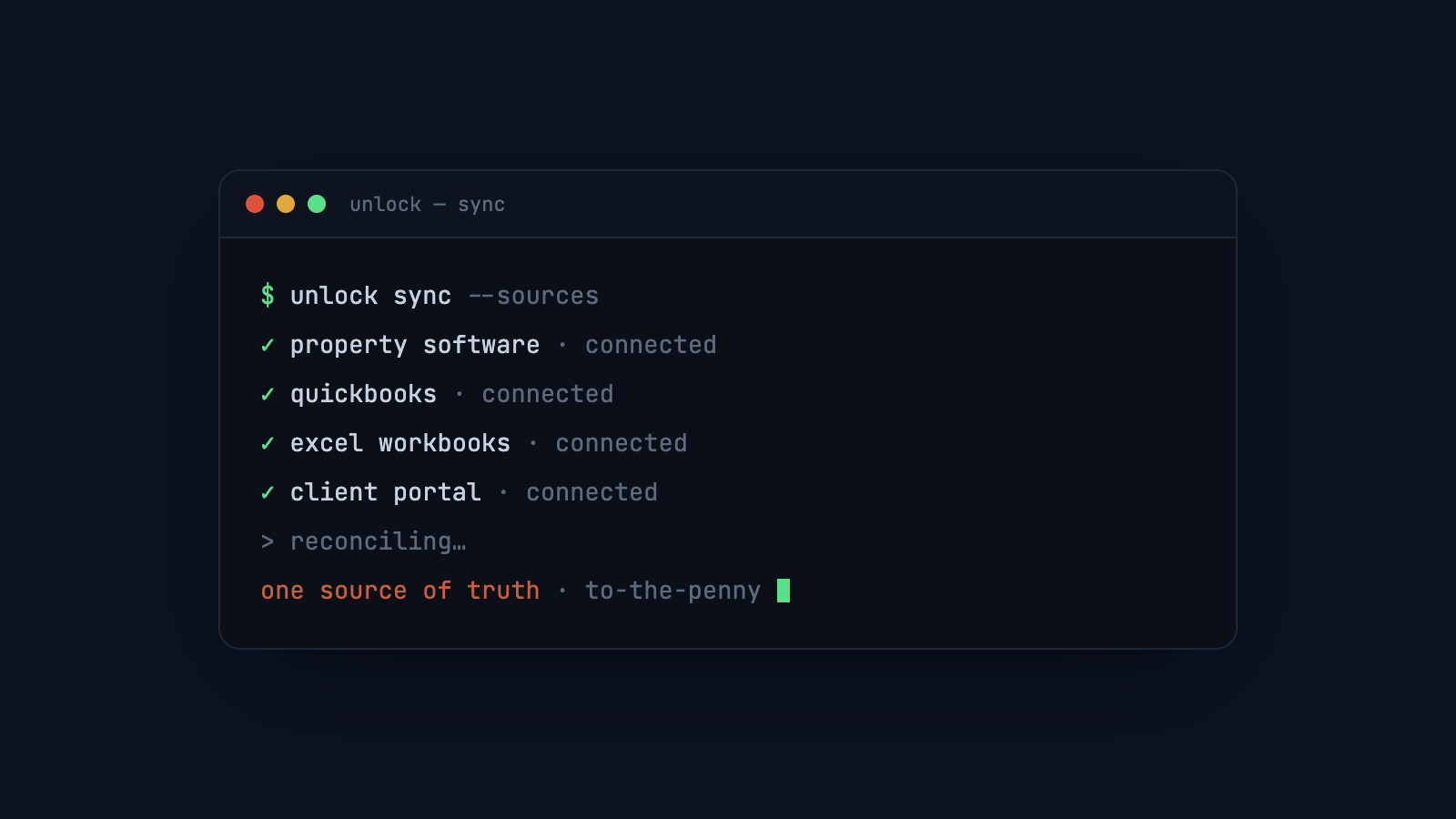
This service fixes both halves. Cleanup makes your data trustworthy: duplicates gone, formats standardized, one source of truth. Integrations keep it that way: your systems talk to each other, so a number entered once shows up everywhere it belongs. The screenshot below is what that feels like. Two systems, reconciled to the penny, on command.
you'll recognize at least one of these
You flipped on the connection between your field app and QuickBooks and the customer list tripled: the same client shows up three times because one system says LLC and the other formats the phone number differently. We scrub both lists before anything syncs, merge what already slipped through, and lock down who gets to create a new customer.
Someone keys yesterday's restaurant sales into QuickBooks by hand, the card deposits land net of fees, and month-end drags past the 10th because nothing ties out. We map your POS categories to the books once, then the daily numbers post themselves and you only review the exceptions.
An item walks out the door at two in the afternoon, still shows in stock online, and by closing you're refunding an order and writing an apology. We give the register and the online store one inventory count, updated the moment anything sells.
The quote gets built at the kitchen table in the estimating app, then rebuilt line by line in QuickBooks so you can invoice it. That's most of a day every week spent copying your own numbers. We connect the two so the estimate becomes the invoice on its own.
Every other Sunday night it's you, a spreadsheet, and every stylist's commission tier, product sales, and card versus cash tips, keyed into payroll by hand. It worked at three chairs. It quietly collapses at eight, so we pipe the booking system straight into the payroll run and the math does itself.
Every morning before the first patient, someone opens yesterday's deposits in the practice software and re-keys them into QuickBooks, because the built-in sync never really worked. We set up one end-of-day summary that posts on its own, so mornings start with patients instead of data entry.
This page isn't theory. One of our current engagements is a monthly data transfer for an insurance client: tenant rolls arrive from different companies in different formats, and we move them into the insurer's system with each company's policy codes handled correctly. Same job, every month, done right. see the use cases →
Let's find your first automation.
Tell us where your time goes, and we'll show you what we'd unlock first.